Bricks Legend
- 4.5
- Rating
- 5.00M
- Installs
- Free
- Price

 Analysis by App-foxy
Some casual games are easy to understand but surprisingly tiring to use for more than a few minutes. I found Bricks Legend more approachable than that. It is a free arcade game from Mint Games, built around the familiar pleasure of clearing bricks, watching a board open up, and trying one more round before putting the phone down. Its appeal is immediate rather than complicated, which makes it a natural fit for short breaks, relaxed play, and people who do not want to learn a large set of rules first.
My main interest while playing was not only whether the brick-breaking action was enjoyable, but also how comfortably it worked in different situations. A game can be simple and still create problems through crowded visuals, rushed controls, small targets, or sensory overload. In this case, the straightforward design helps in several ways, although it does not remove every possible barrier. I would describe it as a friendly casual option, especially for players who prefer a familiar arcade rhythm over a demanding competitive experience.
How the game communicates its action
I focus here on how Bricks Legend makes its arcade action easy to read, and why that matters when you only have a few minutes to play. I also consider how the same straightforward presentation can help some players while leaving visual or touch-based barriers in place, then turn to the practical choices that make a short session more comfortable.
You May Also Like

 Google Keep - Notes and lists
Google Keep’s Quiet Growth Shows the Appeal of Simpler Notes
As mobile work gets busier, Google Keep keeps winning a simple contest: capture a thought quickly, find it later, and get on with the day.

 Blood Strike: 2.5 Anniversary
Blood Strike’s Loadouts Turn Every Drop Into a Tactical Gamble
A close look at Blood Strike’s custom loadouts: how fast access to signature weapons reshapes its battle royale rhythm, rewards preparation, and narrows the gap between fights.

 Pandora - Music & Podcasts
Pandora’s Music Is Easy to Start, but Harder to Recover
Pandora’s strength is its low-effort path from a seed to a station. Its weak spot is how much confidence it asks you to place in connection, setup, and quiet recovery.

 8 Ball Pool
 Is Built on Rivalries, Rematches, and Routine
A close look at the rivalries, rematches, shared routines, and unanswered safety questions that turn a quick pool match into a persistent mobile community.

 Samsung Music
’s Quiet Strength Is Playing What You Already Own
Its reach comes less from spectacle than from dependable access to a personal library. That simplicity is both the app’s strongest retention engine and its ceiling.

 AccuWeather: Weather Radar
AccuWeather Review: A Quick, Clear Forecast for Everyday Decisions
For everyday plans, the best forecast is the one you can understand quickly. AccuWeather makes rain timing, radar, and local conditions easy to act on, with a few trade-offs.
More From Our News Desk



Readable goals and a gentle learning curve
The strongest part of the experience is that I could understand the basic purpose almost immediately. The game belongs to the casual category, and it behaves like a pick-up-and-play arcade title should: the central action is visible, the objective is easy to grasp, and I do not need to study a long tutorial before making useful progress. That matters for anyone who finds layered menus, complicated instructions, or dense game systems tiring.
Bricks Legend works best when I want a quick mental reset. I can open it, recognize the board, and focus on the next move instead of remembering character abilities, equipment combinations, or a story full of names. This simplicity is also useful for people who are new to mobile games. Someone who normally avoids games because they seem difficult can understand the basic loop without needing experience with action titles.
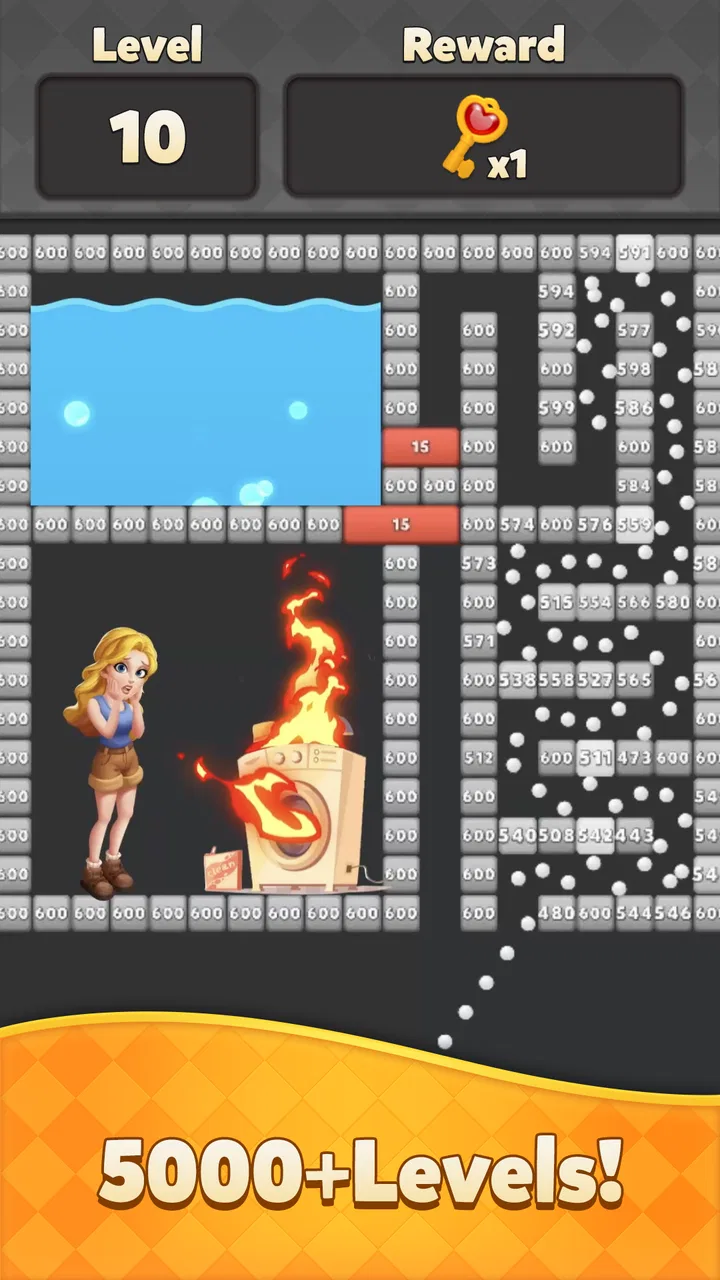
The familiar brick-breaking format gives the game an advantage over more elaborate casual alternatives. Match-three games often ask players to scan many objects and plan combinations, while endless runners demand constant reactions. Here, the visual focus is narrower: I am mainly watching the brick arrangement and the movement connected to the shot. That can make the experience feel less mentally crowded, particularly during a short session.
Navigation that suits brief sessions
I found the overall approach better suited to quick visits than to long, uninterrupted play. The game’s identity is clear from the start, and its arcade structure does not ask me to manage a large collection of screens before playing. That reduces the kind of navigation fatigue that can appear in games overloaded with shops, missions, inventories, and social panels.
There is a practical benefit here for players using a phone one-handed or while their attention is divided. If I am waiting for an appointment or taking a short break, I can approach the game as a contained activity rather than committing to a lengthy campaign. It also makes the title easier to share with a family member who wants to try it without first learning a complicated interface.
That said, simple navigation should not be confused with perfect navigation for every player. A player who needs very large interface elements, strong text scaling, or highly customized controls may still need to judge the game directly on their device. The uncomplicated concept helps, but the experience remains a visual and touch-based mobile game rather than a specially designed accessibility tool.
What I would do before recommending it
If I were recommending it to a friend, I would suggest starting with a short session in a quiet place and checking three things: whether the board is easy to distinguish, whether the touch response feels comfortable, and whether the pace allows enough time to make decisions. Those checks are more useful than assuming that a casual label automatically means effortless access.
I would also keep the phone at a comfortable distance instead of playing with the display too close to my face. Brick layouts can become visually busy as a round develops, and a little physical distance helps me see the whole play area rather than chasing individual pieces. This is a small habit, but it makes the game less tiring during repeated attempts.
Why the uncomplicated format matters
One less obvious strength is the way the game can provide a sense of control without demanding a large investment. In many mobile games, the first few minutes are spent collecting rewards, dismissing prompts, or learning several systems. A brick game has a more direct relationship between what I see and what I do. That makes it easier to stop at any point without feeling that I have abandoned a complicated chain of tasks.
This is particularly useful for players who prefer predictable routines. I can use it as a short transition between activities, such as playing for a few minutes after finishing work or while waiting for transport. The game does not need to become a daily hobby to be worthwhile. Its value is partly in being available for small, manageable moments.
Touch control, timing, and motor comfort
The main physical demand is the relationship between touch input and the direction or timing of the brick-breaking action. That is usually more approachable than a game requiring several simultaneous buttons, rapid swipes, and constant camera control. Players with limited dexterity may appreciate having a focused interaction rather than a control scheme spread across many parts of the screen.
Even so, the game is not completely free of motor demands. Accurate aiming still depends on being able to touch the intended area and adjust a shot with reasonable precision. If a player has difficulty with small targets, involuntary movement, or sustained tapping, the familiar simplicity may not be enough. I would not recommend assuming that the game will suit every hand or every control preference without trying it.
My practical advice is to play with the phone supported on a table or held in the hand that gives the most stable control. That sounds obvious, but it changes the experience. Holding the device loosely while walking can make a precision-based arcade action feel unnecessarily frustrating. A stable posture also reduces the need to correct the phone’s position after every move.
Visual and sensory considerations
Because the game is centered on bricks and movement, visual attention is important. Players who enjoy clear patterns and direct feedback may find the presentation comfortable, while anyone sensitive to motion, contrast, or repeated visual effects should test a short session first. I prefer playing with moderate screen brightness rather than maximum brightness, especially indoors, because it keeps the board easier on my eyes over time.
There is also a difference between recognizing the board and reacting quickly enough to it. A player may understand the layout but still find moving elements tiring if the session becomes intense. Taking breaks between rounds is sensible, not only for comfort but also because fatigue can lead to missed touches and poor decisions. The game is casual, but that does not mean the eyes and hands never need a rest.
Sound can affect the experience as well. Some players like audio feedback because it makes each impact feel more satisfying; others prefer a quiet game while commuting, working nearby, or sharing a room. I would treat sound as part of the personal setup rather than a reason to reject the title. Playing silently can make it more discreet in public, while headphones may help when surrounding noise makes the action harder to follow.
Playing in real everyday situations
A realistic use case is a ten-minute wait at a clinic or café. I can start a round without building up the kind of concentration needed for a strategy game, and the brick-breaking format gives me something active to do without requiring a full evening. If the wait ends suddenly, the short-session nature makes it easier to put the phone away than it would be in a game built around long missions.
Another situation is winding down after a busy day. I would not choose it when I need complete sensory quiet, because moving arcade visuals can still keep my attention engaged. But compared with a competitive online game, it feels less socially demanding and less stressful. That distinction is important for players who want a small distraction rather than rankings, teamwork, or pressure to respond to other people.
It can also work for families sharing a device, provided each person is comfortable with the touch controls and visual presentation. The rules are simple enough to explain verbally: show the board, demonstrate the basic action, and let the new player experiment. I would still supervise younger players around purchases, since the game is free to download but offers in-app items ranging from $1.99 to $99.99 per item.
Where it fits among casual alternatives
Compared with a match-three game, Bricks Legend asks for less pattern matching but more attention to trajectory and timing. Someone who enjoys planning combinations and scanning a grid may prefer the alternative. Someone who likes watching a single action unfold across a board may find the brick format easier to settle into.
Compared with an endless runner, it is generally less dependent on constant movement and split-second lane changes. That can make it a better choice for a player who wants a calmer arcade rhythm. On the other hand, a person looking for fast reflex training or continuous forward momentum may find the experience too measured.
It also differs from large puzzle adventures that use story, characters, and progression systems to keep the player invested. Mint Games keeps the appeal close to the classic arcade idea. That focus is a strength when I want clarity, but it can feel limited if I need a deep narrative, extensive customization, or a large social layer to maintain interest.
Barriers that remain
The biggest limitation is that simplicity does not automatically solve accessibility. A player who needs alternative input methods, spoken guidance, highly adjustable text, or carefully controlled motion may not find enough support here. I would be cautious about recommending it to someone whose access needs depend on those features unless they have tested the game on their own device.
Visual dependence is another important consideration. The board is the heart of the experience, so players with significant difficulty distinguishing shapes, movement, or contrast may face a barrier even though the rules are easy. Color perception can matter in any brick-based design when different elements communicate information visually. I would not rely on color alone when explaining the game to another person; describing position and shape is more helpful.
Motor fatigue can build in a different way. A player may be able to make individual touches comfortably but struggle after repeated rounds. My solution would be to use shorter sessions, rest the hand, and avoid playing while standing or moving. These are workarounds rather than built-in guarantees, so they should not be treated as a substitute for dedicated accessibility controls.
There is also a financial and attention barrier for some households. Although the game is free, the presence of optional purchases means I would check the device’s purchase settings before handing it to a child. That is especially important when the person using the phone may not recognize that a free game can still present paid choices. The game’s Everyone age rating describes its broad content suitability, not a promise that every player will find the controls or visual design equally comfortable.
Device, version, and practical expectations
The current version is 1.7.0, and the game runs on devices using Android 7.0 or later. That makes it relevant to people who keep an older compatible phone rather than upgrading frequently. Still, an older operating system does not guarantee identical comfort across devices. Screen size, touch sensitivity, brightness, and performance can all affect how easy it is to follow the board.
The game has reached over five million installs and holds a 4.5 average from roughly thirty-six thousand ratings, with about two thousand reviews. Those figures suggest that the basic concept has broad appeal, but they do not tell me whether it will suit a particular player’s visual, motor, or sensory needs. I see them as evidence that the format is popular, not as proof of universal usability.
Since it is free, the entry decision is relatively easy: install it, try a brief session, and decide whether the board and controls feel natural. The more important question is not whether the game costs anything to start, but whether its optional spending model fits the way the phone is used. For a personal device, that may be a minor concern; for a shared family device, it deserves attention before play begins.
Who should choose it, and who should skip it
I would recommend Bricks Legend to someone who enjoys classic arcade ideas, wants a game that can be understood quickly, and prefers short sessions over a large progression system. It is also a sensible choice for players who find many modern mobile games too crowded with menus, characters, and competing objectives. Its directness is the reason to choose it.
I would be less likely to recommend it to someone seeking a story-driven adventure, deep strategic planning, online competition, or a highly customizable accessibility experience. A more specialized puzzle game may be better for players who need slower visual analysis, while a turn-based title may suit someone who wants to remove timing pressure. The right alternative depends on whether the player values precision, narrative, customization, or complete control over sensory demands.
For players with motor or sensory considerations, I would frame the recommendation as a trial rather than a guarantee. Try it seated, use a stable grip, adjust the screen to a comfortable brightness, and stop when the interaction becomes tiring. If the board remains easy to follow and the touch action feels manageable, the game can be a pleasant low-commitment pastime. If not, its simple rules will not compensate for the physical effort required to use it.
My inclusive verdict
After spending time with it, I see Bricks Legend as a welcoming casual arcade game whose clearest inclusive quality is its low conceptual load. I do not have to memorize a complicated system before I can enjoy it, and I can fit a round into ordinary gaps in the day. That makes it more approachable than many alternatives that demand constant reactions, extensive reading, or long-term commitment.
Its limits are just as important. The experience still depends on seeing the board, interpreting movement, and making accurate touch inputs. It does not become universally accessible simply because the rules are familiar. Players who need specialized input, stronger visual customization, or reduced sensory stimulation should consider another type of game unless a personal trial shows that this one works comfortably.
For me, the best way to describe it is as a straightforward choice for relaxed arcade play, not as a complete solution for every player or situation. Mint Games has kept the central idea clear, and that clarity gives the game real everyday value. If you want a free, easy-to-start brick game for short breaks and your device meets the Android requirement, it is worth trying. Just set up the phone thoughtfully, keep purchases under control, and judge the experience by your own comfort rather than by its simple reputation alone.
FAQs for Bricks Legend
01What is Bricks Legend, and how is the game played?
Bricks Legend is a brick-breaking arcade game in which you control a paddle to bounce a ball and destroy formations of colorful blocks. Each level generally requires you to clear the board while preventing the ball from falling past the paddle. As you progress, layouts become more challenging and may include power-ups, stronger bricks, obstacles, and limited opportunities to recover from mistakes.
02Is Bricks Legend free to download and play?
Bricks Legend can generally be downloaded and played without an upfront purchase, making it easy to try on a compatible Android or iOS device. However, the free version may include advertising, optional in-app purchases, or other limitations depending on the edition and platform. Before downloading, check the store listing for current pricing, payment details, and available purchase options.
03Does Bricks Legend require an internet connection?
The core brick-breaking gameplay in Bricks Legend may be available offline, which is convenient when traveling or when mobile data is limited. Nevertheless, an internet connection can be required for advertisements, cloud features, updates, leaderboards, or purchases. Offline availability may also vary between versions, so it is best to test the game after installation rather than assuming every feature works without connectivity.
04Is Bricks Legend suitable for children and casual players?
Bricks Legend is designed around simple controls and easy-to-understand arcade mechanics, so casual players can usually begin playing quickly. The later levels may demand faster reactions, careful aiming, and patience. Parents should still review the app’s age rating, advertising, privacy information, and in-app purchase settings, especially if children will use the device without direct supervision.
05What should I know about performance, controls, and in-app purchases before downloading?
The game typically relies on touch controls, with players dragging or moving a paddle to aim the ball and keep it in play. Performance should be smooth on many modern phones and tablets, although older devices may experience reduced responsiveness or loading delays. Check your device’s storage and operating-system requirements, and review whether optional boosters, extra lives, or ad removal involve real-money purchases.
Pros
- Simple controls make it easy to start playing immediately.
- Short levels fit well into quick gaming sessions.
- Colorful brick designs give the game a cheerful visual style.
- Progression provides a clear sense of achievement.
- Offline play is useful when an internet connection is unavailable.
Cons
- Later stages can become repetitive for some players.
- Difficulty may increase suddenly in certain levels.
- Ads can interrupt the experience between gameplay sessions.
- Limited variety may reduce long-term replay value.
- Some power-ups may feel dependent on luck rather than strategy.

Bricks Legend
Gallery